

Electronic Voting for Florida Associations: What Boards Need to Know
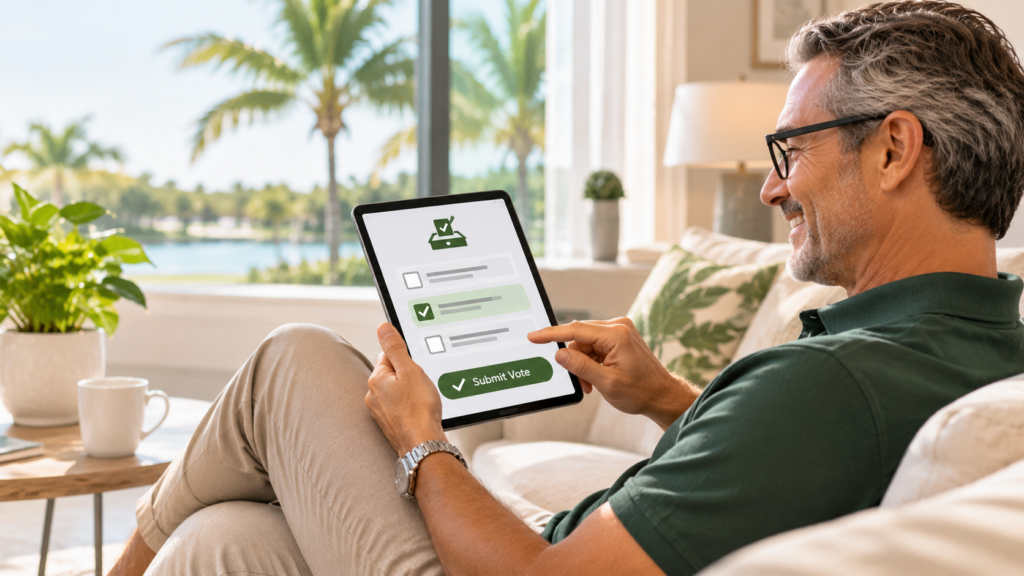
Is your community struggling to reach quorum? Electronic voting is one of the simplest association management tools for getting more owners to vote. According to Get Quorum, communities that adopt it typically see participation rise from about 20% to about 80%, and even 55+ communities often pass 70%.
🎥 Watch the Full Webinar
See the complete walk-through and Q&A, and get a free meeting-notice deadlines calculator.
Why It Matters
Higher turnout helps with more than board elections. It also helps with bylaw amendments, special assessments, SIRS funding decisions, substitute budgets, and material alteration votes. For effective association management, that means important votes pass the first time, without reconvening meetings or knocking on doors.
How to Get Started
Florida law sets out two required steps (§718.128 for condos, §719.129 for co-ops, and §720.317 for HOAs):
- The board adopts a resolution. Condos need only regular board meeting notice. HOAs still need 14 days’ notice.
- Owners opt in. Owners stay on paper unless they consent. Consent stays valid until the owner’s email or unit information changes.
Electronic votes count toward quorum, and e-voters don’t need to attend the meeting or submit a proxy.
Tip: Start collecting consents 30 to 60 days before your first meeting notice goes out. Keep every consent form with your association management records, because owners often forget whether they opted in.
What HB 913 Changed for Condos
- The 14-day notice for the e-voting resolution meeting is gone.
- If 25% of voting interests petition within 180 days after the last annual meeting, the board must take up electronic voting.
- If an annual meeting is held by video, a quorum of the board must be physically present.
- Video meeting recordings are now official records.
- Condos without a formal e-voting system must accept ballots by email at a designated address.
Email ballots are hard to authenticate. In the webinar, Get Quorum recommended working with a professional e-voting provider instead.
Built-In Security
E-voting platforms use email verification, consent records, IP tracking, and token-based authentication to confirm each vote came from the right owner. Election ballots stay secret, and every step leaves an audit trail. Owners with more than one unit get a separate voting link for each unit.
Tips for Better Virtual and Hybrid Meetings
Strong association management starts before meeting day:
- Rehearse. Test the Wifi, cameras, and microphones ahead of time.
- Upgrade your equipment. An external camera, microphone, and speaker, or an all-in-one 360° device, works far better than a single laptop.
- Use webinar-style links so you get an attendance report.
- Settle voting logistics early. Agree on when polls close and how tabulation works, and check e-voters in so they don’t get a second paper ballot.
- Set an agenda with time limits for owner comments.
- Tell your association attorney well before the meeting that e-voting is in place.
Real Results
One Alliant Association Management community used to pull owners in from the pool just to reach quorum. After switching to electronic voting, it reached quorum three days before the meeting. On a recent notice for another 60-home community, only four owners needed paper copies.
Ready to bring electronic voting to your community? Contact your association management team to get set up before this year’s notices go out.
This article is for general information and is not legal advice. Please consult your association’s attorney about your community’s requirements.
👉 Get the Latest Updates & Resources for Your Community.
Read more related articles.